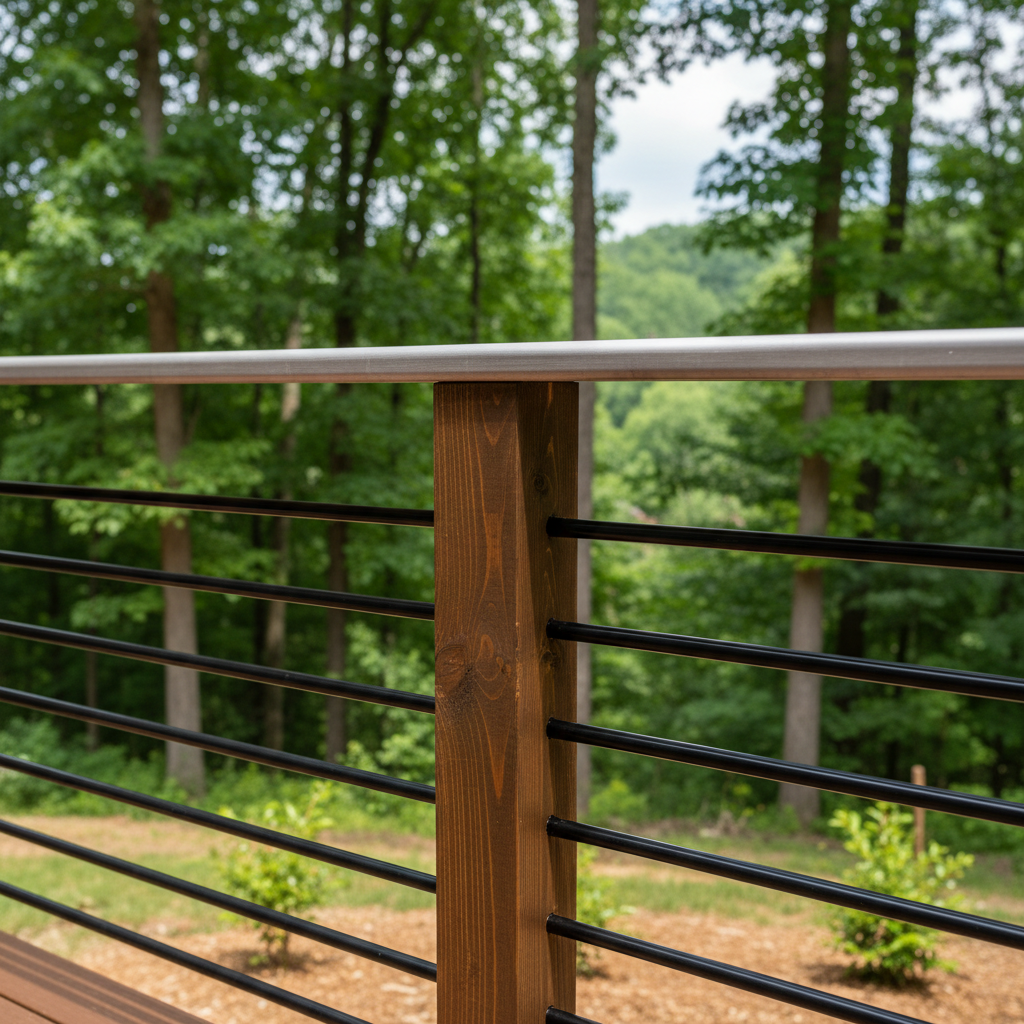
Alright, let's talk deck railings. I get a lot of questions about these, and it's no surprise. They're not just for looks; they're about safety, code compliance, and making your outdoor space truly functional. As a local guy running Mighty Decking, I've seen just about every scenario here in Loudon. So, I figured I'd tackle some of the most common questions you homeowners ask me.
Do I even need a railing on my deck?
This is probably the first thing people wonder, especially if their deck isn't super high off the ground. The short answer for Loudon, and pretty much everywhere else, is: it depends on the height. Generally, if any part of your deck surface is 30 inches or more above the grade (that's the ground level) measured at any point within 3 feet horizontally of the edge, then yes, you absolutely need a guardrail. That 30-inch rule is pretty standard across the board, based on the International Residential Code (IRC) which Tennessee uses as its foundation. Don't skip this, folks. It's a safety thing, and the building inspector will definitely red-flag it if you're over that height and don't have one.
What's the required height for a deck railing?
Once you know you need one, the next question is always about height. For residential decks, the top of your guardrail needs to be at least 36 inches above the deck surface. That's from the walking surface to the top of the rail. For commercial properties, it's usually 42 inches, but we're talking about homes here. This isn't a suggestion; it's a code requirement designed to prevent falls. We always make sure our Mighty Decking installations meet or exceed this.
What about the spacing between balusters or pickets?
This is another critical safety point, especially if you've got little ones or pets running around. The code states that a 4-inch sphere (think of a small ball) can't pass through any opening in your railing system. That means the space between your balusters, or pickets, can't be more than 4 inches. The reason is simple: it prevents small children from slipping through or getting their heads stuck. We've all seen those old decks where the balusters are wide apart, and it just gives you the jitters. Modern code fixes that.
Can I install the railing myself, or should I hire a pro?
Look, I'm a big believer in DIY for some things. Changing a light fixture, painting a wall – go for it. But deck railings? This is where I'd strongly recommend bringing in a professional, especially if you're not experienced with structural work and code requirements. It's not just about screwing some pieces together. You've got to consider the proper attachment to the deck frame, the load-bearing capacity, ensuring everything is plumb and level, and meeting those strict spacing and height codes. One mistake could mean a failed inspection, or worse, a safety hazard. I've seen folks try to cut corners, and it almost always ends up costing more to fix than if they'd just hired someone like us at Mighty Decking from the start. Plus, getting the right permits and inspections is part of the process, and we handle all that for you.
What are my material options for deck railings?
You've got a lot more choices than just plain old wood these days, which is great because different materials offer different looks, maintenance levels, and price points. Here's a quick rundown of what we commonly install:
- Treated Wood: This is still a popular, cost-effective option. It's classic, can be stained or painted, and if maintained well, it lasts. But it does require regular upkeep – cleaning, staining, sealing – to prevent rot and splintering, especially with our humid Loudon summers.
- Composite: Made from a mix of wood fibers and plastic, composite railings are super low maintenance. They don't rot, warp, or splinter, and they come in a variety of colors that don't need painting. They're usually a bit pricier upfront than wood, but you save on maintenance over time.
- Vinyl/PVC: Similar to composite in terms of low maintenance, vinyl railings are durable, won't fade, and are easy to clean. They typically come in white or tan and offer a clean, classic look.
- Aluminum: These are sleek, strong, and virtually maintenance-free. Aluminum railings are great for modern designs and offer excellent visibility if you're trying to preserve a view, say, overlooking Fort Loudoun Lake. They're more expensive than wood but last a very long time.
- Cable Railing: This is a modern, minimalist look that uses thin stainless steel cables run horizontally between posts. It's fantastic for preserving views and offers a very open feel. It's definitely on the higher end of the price spectrum due to the materials and specialized installation.
- Glass Panel: For the ultimate unobstructed view, glass panels are an option. They're elegant and modern but also the most expensive and require regular cleaning to keep them looking good.
Each material has its pros and cons, and what's best for you often comes down to your budget, desired aesthetic, and how much maintenance you're willing to do. We can walk you through the options and show you examples.
How much does a deck railing system cost?
Ah, the million-dollar question, right? Or, more accurately, the several-thousand-dollar question. The cost of a deck railing system varies wildly based on a few key factors: the material you choose (as we just discussed), the linear footage of railing needed, the complexity of your deck's layout (lots of corners or stairs will increase costs), and whether you're doing it yourself or hiring a professional. As a general ballpark, you could be looking anywhere from $25 to $150+ per linear foot for materials and installation. Wood will be on the lower end, while aluminum, cable, or glass will be on the higher end. It's really hard to give an exact number without seeing your specific project, but we always provide a detailed, transparent quote once we understand your needs. Don't just go for the cheapest option, though. Remember, this is a safety feature and a long-term investment in your home.
Hopefully, this clears up some of those nagging questions about deck railings. It's a big part of making your outdoor space safe, functional, and beautiful. If you're in Loudon or the surrounding areas and thinking about a new deck or upgrading your existing railing, give Mighty Decking a call. We're happy to come out, take a look, and give you honest advice.